The short answer
Five minutes a day is enough time for a preschooler to practice letter sounds. Start with the short vowel sounds, say the sound a letter makes rather than its name, use quick games instead of drills, and stop while your child still wants more. Short and steady fits a preschooler's attention span, and each child moves at their own pace.
Why only five minutes a day?
Five minutes fits a preschooler's attention span, and it is short enough to happen every day. A little each day keeps the sounds fresh. A long session once a week tends to end in wiggles and tears for both of you.
If your child is three or four, five minutes may be the whole tank. That is fine. Set a kitchen timer if it helps you both know when you are done.
Why start with the short vowel sounds?
Start with short vowels because almost every first word a child reads has one in the middle. Cat, bed, pig, hot, sun: the vowel is the part that holds the word together. Once your child knows those five sounds, three-letter words are within reach.
| Vowel | Short sound | Picture word | Mouth tip |
|---|---|---|---|
| a | /a/ as in apple | apple | Drop your jaw wide open |
| e | /e/ as in egg | egg | A small, relaxed smile |
| i | /i/ as in itch | itch | Smile a little, mouth barely open |
| o | /o/ as in octopus | octopus | Round, open mouth, like "ahh" at the doctor |
| u | /u/ as in up | up | Relaxed mouth, a short "uh" from the belly |
Do one vowel at a time. Many families start with short a, because it shows up in so many first words. Stay with it for a few days, then add the next. Mix a few easy consonant sounds in as you go, like /m/, /s/ and /t/, so you can build little words.
Teach the sound the letter makes, not the name on the alphabet song. Children read words with sounds.
Should I say the letter name or the letter sound?
Say the sound. The letter name for m is "em," but the sound is /mmm/, and the sound is what your child will blend into words. If your child learns "em, ay, tee," the word "mat" will not come out of those names.
Do
- Stretch the sounds that can stretch: /mmm/, /sss/, /fff/
- Clip the quick sounds short: /t/, /p/, /b/
- Show your mouth, and let your child copy it in a mirror
- Use the same picture word for a sound every time
Don't
- Don't add "uh" to the end: /m/, not "muh"
- Don't switch between the name and the sound in the same game
- Don't teach all 26 letters at once
- Don't correct a wrong sound with a sigh; just say it again together
What games make letter sounds fun?
Games make letter sounds stick because your child is moving, laughing and guessing instead of sitting through a lesson. Pick one or two a day. Here are favorites that need nothing you do not already own.
| Game | How to play | Good for |
|---|---|---|
| I Spy sounds | "I spy something that starts with /a/" | Hearing first sounds |
| Sound basket | Fill a basket with objects that start with the sound of the day | Matching sounds to real things |
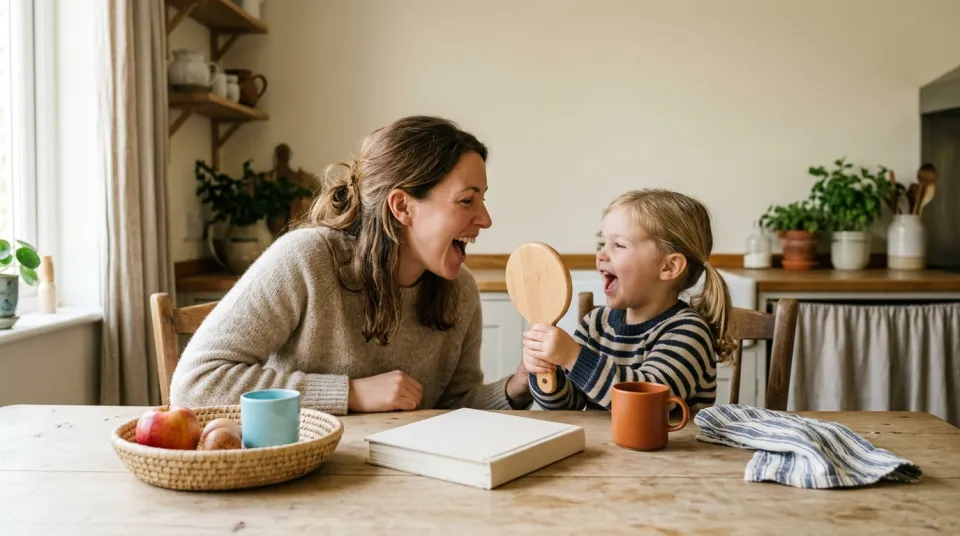
| Mirror mouth | Make each sound together in a hand mirror | Seeing how sounds are made |
| Sound hop | Hop once for each sound in a word like "sun" | Hearing each sound in a word |
| Robot talk | Say "c-a-t" like a robot, and let your child guess the word | Blending sounds into words |
Robot talk is the one to work up to. It is blending, and blending is where reading starts to click.
What does the five-minute routine look like?
The routine is five one-minute steps that move from warm-up to a quick game to a cheer at the end. It is the same every day, so your child knows what is coming and nobody has to argue about it.
Sound of the day.
Say the new sound, show the picture word, and say it together three times.
Mirror mouth.
Make the sound in the mirror and notice what your mouths are doing.
Find it.
Play I Spy or fill the sound basket with things that start with the sound.
Review.
Quickly say yesterday's sounds back, one picture word each.
Celebrate.
End with a high five and the one thing your child did best today.
When should I stop for the day?
Stop at five minutes, or sooner if your child is wiggly, guessing wildly, or getting upset. The goal is for your child to leave wanting more. Ending on a happy note is what makes tomorrow's five minutes easy.
Skip a day when your child is sick, overtired or upset. Five minutes is a habit, not a test.
What comes after the short vowel sounds?
After the short vowels, the next step is putting sounds together into simple three-letter words, like "sat," "pen," "sit," "hop" and "fun." Your child says each sound, then blends them, just like in robot talk. Practicing with books built around one vowel at a time keeps the step small.
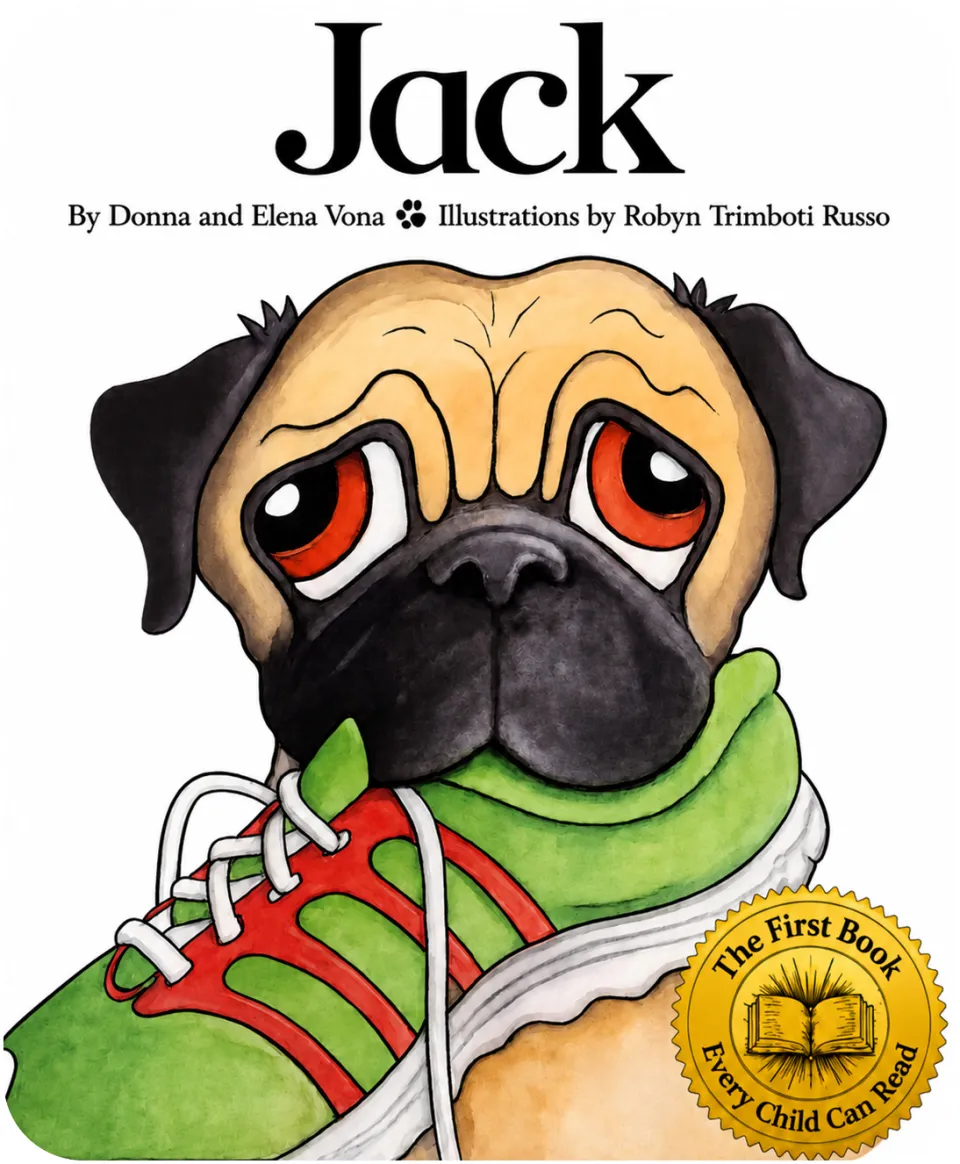
That is exactly what Elena and I are working on next. This spring we are releasing a set of five short-vowel readers, one book for each vowel, with very simple words and Robyn's watercolor pictures. It is meant to pick up right where this routine leaves off. Experiences vary, and your child's pace is the right pace.