The short answer
Many children show the first signs of reading readiness somewhere between ages three and five, and the signs matter more than the birthday. A teacher looks for seven things: a love of stories, book handling, noticing print, playing with sounds, knowing some letters, retelling, and a few minutes of focus. Your child does not need all seven to begin. Experiences vary, and that is normal.
What does "ready to read" actually mean?
Ready to read means the building blocks are in place, not that your child can sound out words yet. Reading rests on a few earlier skills: hearing the sounds inside words, knowing that print carries a message, recognizing some letters, and wanting to spend time with a book. When those start showing up together, short and playful teaching tends to land well.
None of this runs on a birthday. Two children born the same week can be a long way apart in these skills and both be right on track. So look at what your child does, not how old they are.
What are the seven signs a teacher looks for?
The seven signs are a love of stories, book handling, noticing print, playing with sounds, knowing some letters, retelling a story, and a few minutes of focus. Here is what each one looks like on a normal day at home.
| Sign | What it looks like at home | Try this tonight |
|---|---|---|
| 1. Loves stories | Brings you a book and asks for "again" | Let them pick the book, even if it is the same one |
| 2. Handles books | Holds a book right side up and turns pages front to back | Hand it over upside down and see if they fix it |
| 3. Notices print | Points at words and asks "What does that say?" | Run your finger under the title as you read it |
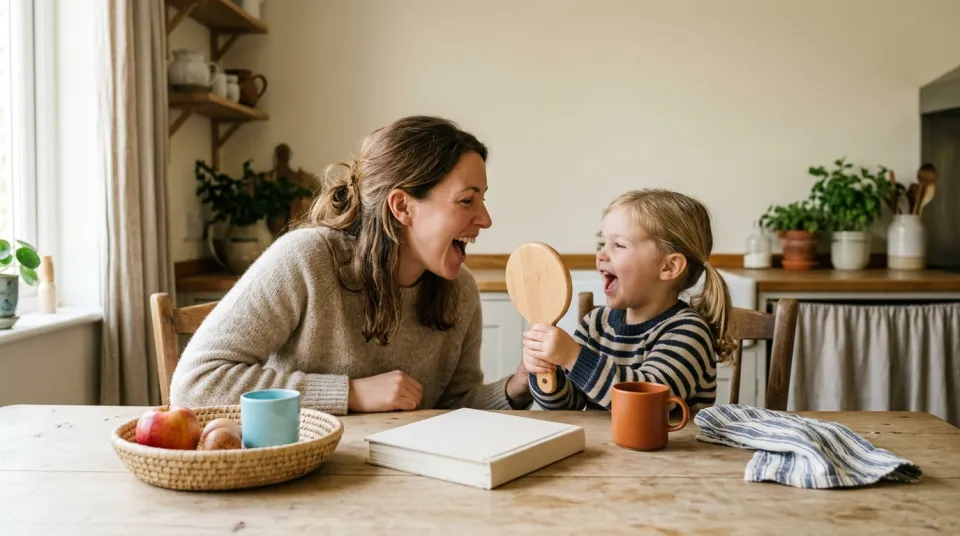
| 4. Plays with sounds | Enjoys rhymes and makes up silly words | Say "cat, hat, bat" and ask for one more |
| 5. Knows some letters | Spots the letters in their own name | Find the first letter of their name on a cereal box |
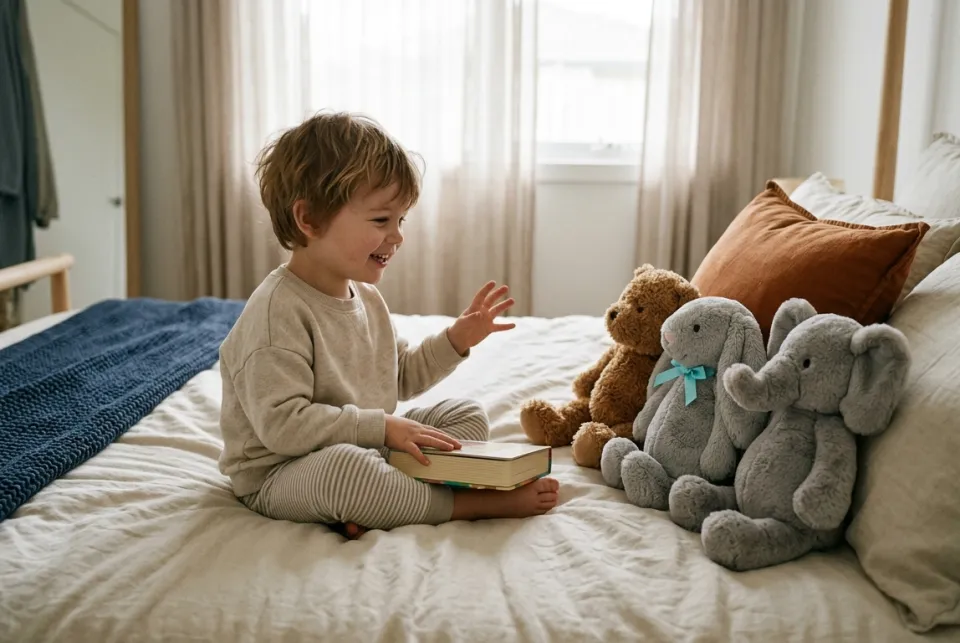
| 6. Retells stories | Tells you what comes next in a favorite book | Pause before a page turn and let them fill it in |
| 7. Can focus briefly | Stays with one short activity for a few minutes | Play one short game and stop while it is still fun |
A few of these deserve a closer look. Sign 3 is the quiet one parents miss. When your child points at a sign in the grocery store and asks what it says, they have figured out that those marks mean something. That idea comes before any phonics lesson.
Sign 4 is about ears, not eyes. A child who can hear that "sun" and "sock" start the same way is getting ready to match sounds to letters later. The CDC lists telling what comes next in a well-known story among its milestones at four, and using or recognizing simple rhymes at five.
Sign 7 is small on purpose. Nobody needs a preschooler to sit for half an hour. A few focused minutes is plenty.
Which sign matters most?
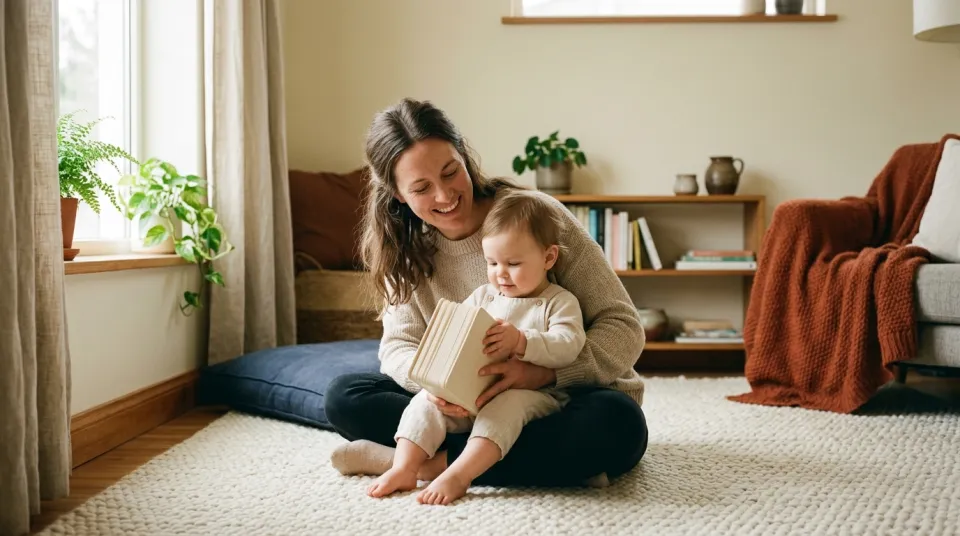
A love of stories matters most, because every other skill grows faster when your child wants to be near books. A child who knows twenty letters but runs from the reading chair is often less ready than a child who knows four letters and begs for one more story.
A child who begs for one more story is closer to reading than a child who can recite the alphabet and runs from the book.
That is why the first job at home is to make books feel good. Snuggles, silly voices, the same favorite story for the tenth time. It all counts.
What if my child shows only some of the signs?
Showing only some of the signs is normal, and it simply tells you where to play next. Most children are strong in two or three areas and still growing in the rest. You can start short sound games with a child who loves stories but does not know many letters yet.
Do
- Start with the signs your child already shows and build out from there
- Keep practice to a few minutes and end on a win
- Praise the effort ("You found the S!") more than the right answer
- Keep reading aloud every day, even after your child starts reading words
Don't
- Don't compare your child with a cousin or a classmate
- Don't drill flashcards when your child is tired or hungry
- Don't turn a bedtime story into a quiz
- Don't wait for all seven signs before you play with sounds
How can I build reading readiness at home without pushing?
You build readiness with short, playful routines that fit into the day you already have. A few minutes here and there does more than one long session a week, and your child never has to feel tested.
Read aloud once a day.
Pick a time that already exists, like after bath, so it happens without a fight.
Point as you read.
Slide your finger under the words now and then so your child sees that print runs left to right.
Play one sound game.
Try "I spy something that starts with /m/" in the car or at dinner.
Use their name.
Write it on drawings and point out its letters on signs and boxes.
Let them retell.
Ask "What happened to the dog?" and enjoy whatever version you get.
None of these need a workbook. Your child will not know they are working, and that is the point.
When should I talk to someone about my child's readiness?
Talk to your pediatrician if your child is losing skills they used to have, or if a worry keeps coming back. The CDC's Learn the Signs. Act Early. program encourages parents to bring concerns to the doctor early rather than wait and see.
You know your child better than any checklist does. Use what you notice gently, and keep the reading fun while you watch.